

One afternoon in the beginning of August 2017, I chanced upon twelve Old Ladies in North Berwick. Unremarkable perhaps, given the town’s demographics. They were nestled together in small groups and hiding within a damp tunnel. This was an exciting and thrilling find (for me at least) and according to available statistics, the largest such gathering that had yet been recorded in Scotland!
Of course I’m not referring to the sort of Old Lady that I look forward to becoming someday soon, but instead an impressive species of moth. Based solely on its name (as good a reason as any), it was a moth I had been wanting to see for some time, so to discover it on my doorstep was fantastic.
The name “Old Lady” is believed to derive from the wing markings that look a bit like the shawl that old ladies might once have worn. It’s scientific name is Mormo maura: In Greek mythology Mormo was a spirit who bit bad children and maura probably derives from Latin or Greek words for dark. Not necessarily a kind old lady then.
They are on the wing in July and August and rest up by day in dark places such as outbuildings, tunnels and bird boxes. The moth is found through much of the UK, usually in damp places by streams and rivers, but they are not often seen. This might in part be a reflection of the fact they are not easily attracted to light, the method most often used by moth enthusiasts to record species. Instead, a sweet syrupy mixture laced with alcohol and painted onto posts is reputed a more effective lure. As with many species of insect which are neither ‘of conservation concern’ nor ‘an economic pest’ I could find very little information about their habits or ecology. So, using small dabs of paint to identify individuals, and visiting the culvert regularly both day and night, I endeavoured to learn a bit more about my Old Ladies.

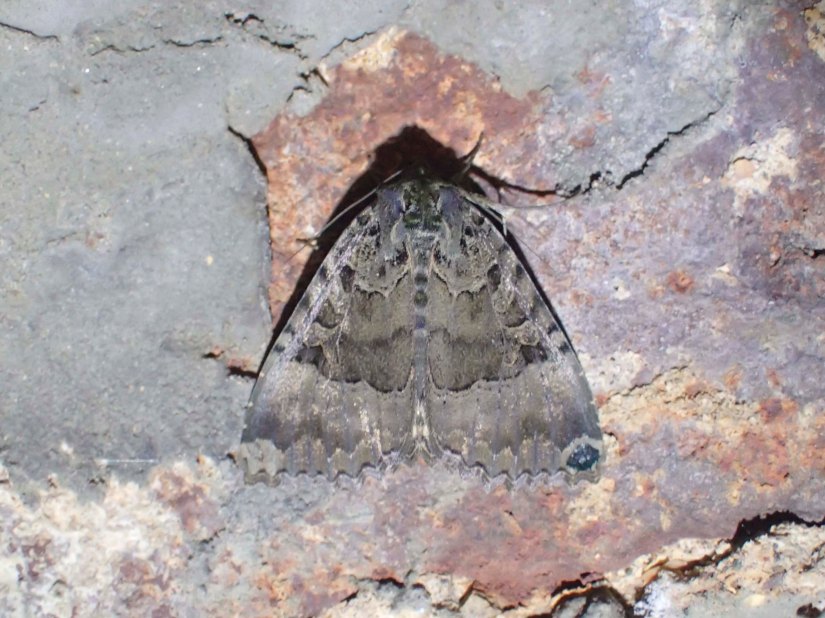
Without going into too much detail, I can report that around dusk, some females ‘called’ to attract males within the culvert and mating also took place in the culvert around this time. Sometimes individuals didn’t go out for the night, but stayed in the same spot on the wall or ceiling. Some individuals disappeared for a day or two before returning, presumably using other daytime roosting spots in the meantime. I found no evidence of sherry or bingo.
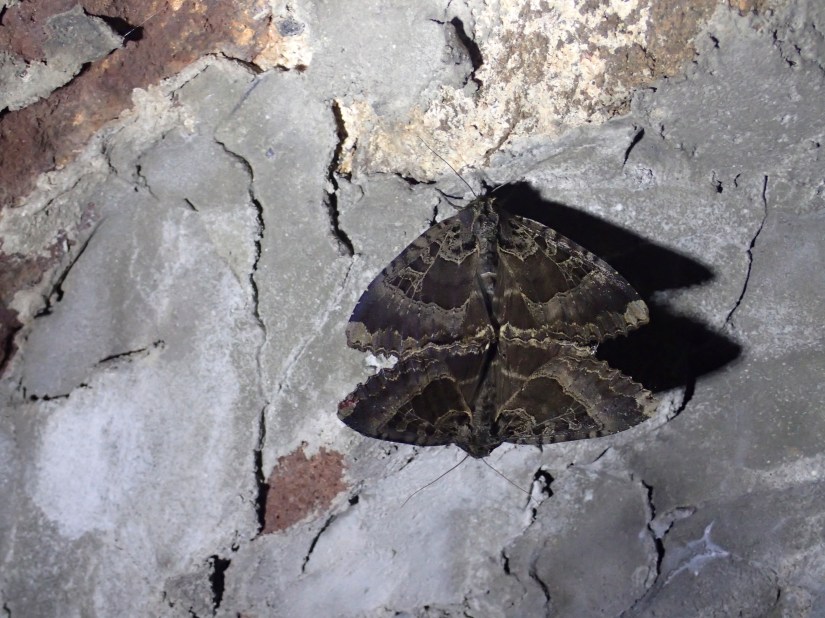
Since then, each July, I’ve looked forward to acquainting myself with a new generation of Old Lady in North Berwick. In 2022 there were an amazing 50 using the culvert at once.
 Moth World